Unexpected expenses are costs that appear suddenly and disrupt your regular financial routine, often without warning and without enough time to properly prepare. In Canada, these expenses commonly include vehicle repairs, prescription medication, emergency pet care, urgent travel, utility spikes, home maintenance issues, and childcare disruptions. While many people assume financial emergencies only involve major life events, smaller everyday problems are often the expenses that quietly create the most financial pressure.
The difficult part is not always the emergency itself. It is the ripple effect that follows.
One unexpected expense can quickly affect groceries, rent timing, transportation, debt payments, or even your ability to work. That is why financial preparedness matters so much in modern Canadian budgeting. Even households with stable incomes can feel caught off guard when multiple smaller costs appear within the same month.
According to Statistics Canada, many Canadians would struggle to cover even a relatively modest unexpected expense, highlighting how common financial vulnerability has become.
What You’ll Learn
- Why small emergencies often create bigger financial problems than expected
- Common hidden costs Canadians frequently overlook
- How emergency expenses affect household budgeting
- Practical ways to prepare for unexpected bills
- Smart approaches to emergency savings and responsible borrowing
- How flexible financial support can help during short-term financial gaps
The Real Problem Is Rarely Just One Expense
Most people prepare mentally for large emergencies. Fewer people prepare for several moderate expenses happening at once.
A dead car battery may seem manageable until it happens during a week with higher grocery costs and increased utility bills. A prescription refill may not seem catastrophic until it arrives shortly before rent is due. Financial stress often builds gradually through overlapping expenses rather than one dramatic event.
This is why budgeting for emergencies is about more than setting aside money for disasters. It is about creating flexibility for ordinary disruptions that still carry real financial consequences.
Many Canadians searching for online payday loans are not dealing with reckless spending habits. They are often trying to bridge temporary financial gaps caused by everyday situations they simply could not predict.
Your Car Rarely Breaks Down at a Convenient Time
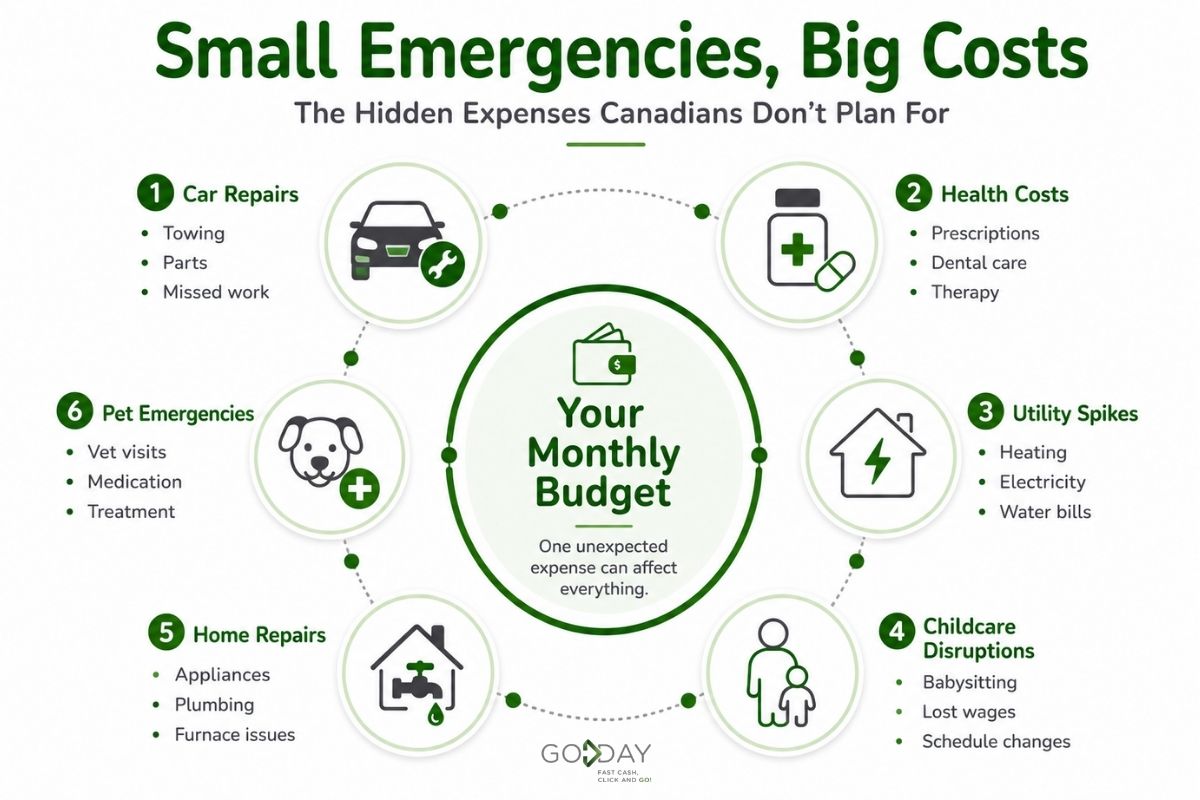
Vehicle costs remain one of the most common hidden emergency expenses across Canada. Even relatively small repairs can become expensive quickly once towing, diagnostics, labour, rideshare costs, missed work hours, and replacement parts are added together. Winter conditions across many provinces also increase wear on tires, batteries, brakes, and heating systems.
What catches many households off guard is the secondary financial impact.
A repair bill may force someone to:
- Miss shifts at work
- Pay for temporary transportation
- Delay other bills
- Dip into grocery money
- Accumulate overdraft charges
Small automotive problems often create much larger budget disruptions than people initially expect.
This becomes especially difficult for households already managing fluctuating expenses or variable income schedules. Learning how to budget around changing monthly income can help reduce some of that pressure by building more flexibility into regular financial planning.
Prescription Costs Add Up Faster Than Most People Realize
Healthcare in Canada is often viewed through the lens of universal coverage, but many medical expenses still come directly from personal budgets.
Prescription medications, dental emergencies, physiotherapy appointments, vision care, mobility aids, and mental health services can all create sudden out of pocket costs. Even households with benefits may still face deductibles, partial coverage, or delays in reimbursement.
Unexpected health expenses become particularly stressful because they rarely feel optional. When someone needs medication immediately, financial planning tends to become secondary. People often prioritize health first and figure out the financial consequences afterward.
This is one reason hidden emergency costs feel so emotionally draining. They force difficult decisions between financial stability and immediate needs.
The Government of Canada’s financial literacy resources emphasize that building stronger financial habits often starts with preparing for smaller, everyday disruptions before they escalate into larger financial problems.
Utility Bills Can Shift Without Warning
Many Canadians underestimate how unpredictable monthly utility costs can become. A colder winter, hotter summer, plumbing issue, aging furnace, or increased electricity usage can dramatically raise household bills with very little warning. In some cases, a single extreme weather month can increase costs by hundreds of dollars.
Unexpected utility spikes are especially difficult because they arrive after the expense has already happened.
There is no opportunity to decline the service or postpone the payment. The bill simply arrives, often during a month already carrying other financial pressure.
Households dealing with short-term financial emergencies Canada wide often describe utilities as one of the hardest costs to manage because they affect every part of daily life simultaneously.
Childcare Problems Can Trigger Chain Reactions
Parents understand that childcare disruptions rarely stay contained to childcare alone.
A cancelled daycare day, school closure, sick child, or unexpected schedule change can affect:
- Work attendance
- Transportation costs
- Meal expenses
- Lost wages
- Emergency babysitting fees
For many working families, the financial consequences extend well beyond the original issue.
This is why budgeting for unexpected expenses requires looking at indirect costs as well as direct ones. The emergency itself may be manageable. The financial domino effect often becomes the larger problem.
Home Repairs Usually Start Small Before Becoming Expensive
A leaking pipe. A broken appliance. A damaged roof shingle. A faulty furnace sensor.
Many expensive home emergencies begin as relatively minor issues that worsen over time.
Unfortunately, delaying repairs often increases total costs significantly. A small plumbing issue can eventually lead to water damage. An aging appliance may suddenly stop working completely. Heating problems during Canadian winters can become urgent almost immediately.
Homeowners and renters alike face hidden emergency costs tied to maintaining safe, functional living spaces.
This is why the importance of emergency funds extends beyond catastrophic events. Emergency savings help create breathing room for the smaller maintenance issues that appear regularly throughout adult life. When savings are unavailable, some Canadians also turn to flexible financial options from GoDay to help manage urgent repair costs responsibly.
Pet Emergencies Are Emotional and Financial at the Same Time
Veterinary emergencies are among the least planned for household expenses.
Many Canadians view pets as family members, which means financial decisions around emergency care often become emotional decisions as well. Diagnostic testing, medications, overnight monitoring, surgery, or specialized treatment can quickly create bills far larger than expected.
Even relatively routine emergency visits can cost hundreds of dollars.
Because these situations are urgent, households often need access to funds immediately rather than weeks later. This is where some people begin exploring quick online loans for emergency costs when savings are unavailable or insufficient.
The key is approaching borrowing carefully, realistically, and responsibly.
Last Minute Family Obligations Are Financial Emergencies Too
Not every emergency involves something physically breaking.
Unexpected travel for funerals, family illness, caregiving responsibilities, or urgent personal obligations can create immediate financial pressure through:
- Transportation
- Hotels
- Childcare
- Lost income
- Food expenses
- Time away from work
These situations are emotionally stressful before financial concerns even enter the conversation.
Many Canadians underestimate how quickly unplanned travel costs accumulate, especially when arrangements must happen immediately.
Budgeting for Unexpected Expenses Starts With Realism
One of the biggest financial mistakes people make is creating budgets that assume every month will behave perfectly.
Real life does not work that way. Cars need repairs. Kids get sick. Appliances fail. Prices fluctuate. Emergencies happen. Financial planning becomes far more effective when it accepts unpredictability rather than ignoring it.
Budgeting for unexpected expenses does not necessarily require massive savings immediately. It starts with smaller, sustainable habits:
- Building modest emergency reserves consistently
- Tracking irregular annual costs
- Reducing reliance on overdraft protection
- Creating separate savings categories
- Reviewing subscriptions and recurring spending
- Planning for seasonal expense increases
The goal is not perfection. The goal is resilience.
The Financial Consumer Agency of Canada’s guidance on managing money during challenging times encourages Canadians to regularly review expenses, prioritize essential costs, and build flexibility into monthly budgets wherever possible.
How to Build an Emergency Fund Without Feeling Overwhelmed
Many financial articles discuss emergency funds as though everyone can comfortably save thousands of dollars immediately.
That is not realistic for many households.
A more practical approach focuses on consistency rather than size at the beginning. Even smaller emergency savings can reduce reliance on high stress borrowing during unexpected situations.
Some effective starting strategies include:
- Automatically transferring small weekly amounts into savings
- Saving tax refunds or work bonuses
- Redirecting temporary extra income
- Building a separate emergency account
- Starting with smaller targets like $250 or $500 first
The Financial Consumer Agency of Canada recommends building emergency savings gradually through smaller, consistent contributions rather than waiting until you can save large amounts at once.
The importance of emergency funds is not only financial. Savings also reduce panic, stress, and rushed financial decisions during emergencies.
For Canadians comparing options during emergencies, understanding the difference between an emergency fund vs line of credit can help clarify when savings, borrowing, or flexible credit solutions may make the most sense.

Responsible Borrowing Matters During Financial Gaps
Not everyone has immediate savings available when emergencies happen. That reality deserves honesty, not judgment.
Short term borrowing can sometimes help cover urgent financial gaps when used carefully and strategically. The important part is understanding repayment expectations, total borrowing costs, and whether the solution realistically fits the situation.
Responsible borrowing means:
- Borrowing only what is necessary
- Reviewing repayment terms carefully
- Avoiding repeated borrowing cycles
- Having a realistic repayment plan
- Understanding fees and timelines clearly
Transparent lenders matter because emergencies already create enough stress without confusion or hidden conditions.
As CIRO explains in its emergency fund resource, emergency savings and responsible borrowing strategies work best when households understand both their short term needs and their long term financial stability goals.
This is where short-term borrowing solutions can provide temporary flexibility for Canadians managing sudden financial disruptions responsibly.
Financial Preparedness Is Really About Reducing Stress
Most people cannot eliminate emergencies completely. What financial preparedness actually does is reduce the emotional and financial chaos surrounding those situations.
Even small improvements in budgeting, emergency planning, savings habits, and borrowing awareness can create more stability over time. The goal is not to become immune to financial surprises. The goal is to become better equipped to handle them calmly when they happen.
At some point, nearly everyone faces unexpected expenses Canada households simply cannot fully predict in advance. Preparation matters because life rarely waits for the perfect financial moment.
Key Takeaways
- Small emergencies often create larger financial consequences through overlapping costs
- Vehicle repairs, prescriptions, childcare, utilities, pet care, and home maintenance are among the most common hidden emergency costs
- Budget flexibility matters just as much as income level
- Emergency funds help reduce stress and improve financial resilience over time
- Responsible borrowing can help bridge short term financial gaps when savings are unavailable
- Financial preparedness focuses on stability, flexibility, and realistic planning rather than perfection
Frequently Asked Questions
Why do small emergencies feel so financially overwhelming?
Smaller emergencies often affect multiple parts of a household budget at once. A car repair, for example, may also create transportation costs, missed work, and delayed bill payments. The emotional stress combined with overlapping financial consequences is what makes relatively small emergencies feel much larger financially.
What are the most common unexpected expenses in Canada?
Common unexpected expenses Canada households face include vehicle repairs, prescription costs, veterinary emergencies, utility spikes, childcare disruptions, appliance breakdowns, urgent travel, and home maintenance problems. Many of these expenses happen suddenly and require immediate attention before households have time to fully adjust their budgets.
How much should I keep in an emergency fund?
Financial experts often recommend building emergency savings gradually rather than aiming for a large amount immediately. Starting with smaller targets such as $250 to $1,000 can still provide meaningful financial flexibility while helping reduce reliance on high stress borrowing during smaller emergencies.
Is borrowing for emergency expenses always a bad idea?
Not necessarily. Responsible borrowing from a reputable platform like GoDay can sometimes help cover urgent short term expenses when savings are unavailable. The key is understanding repayment terms clearly, borrowing only what is needed, and ensuring the repayment plan realistically fits your financial situation and monthly budget.
What is the best way to prepare for unexpected bills?
Preparing for unexpected bills starts with realistic budgeting, tracking recurring expenses, building small emergency savings consistently, and reducing unnecessary financial strain where possible. Creating flexibility within your monthly budget often helps households respond more calmly when emergencies eventually happen.
Final Thoughts
Financial emergencies are not always dramatic. Often, they arrive quietly through everyday situations that simply cost more than expected.
A prescription refill. A furnace repair. A last minute flight. A daycare disruption. Individually, these costs may seem manageable. Together, they can quickly place real pressure on household finances.
The good news is that financial preparedness does not require perfection. Small changes in budgeting habits, emergency planning, savings routines, and borrowing awareness can create stronger long term stability over time.
For Canadians navigating temporary financial gaps caused by unexpected expenses, contact GoDay for flexible financial support and learn more about practical options designed to help manage short term financial pressure responsibly.


